Author: S. K.

  • ‘Our Transcapes’: a new project with Dr Ina Linge

    ‘Our Transcapes’: a new project with Dr Ina Linge

    A very exciting update today! Dr Ina Linge from the University of Exeter and I – research funding allowing – are joining forces. As part of her proposed research project exploring queer natures, Ina has invited me to contribute as an Artist in Residence, pulling from my Albion Awakes research and creative practice.

    While we wait to see about our funding prospects, I’ve been cooking up my contribution to the project: Our Transcapes, a creative pilgrimage based in Yorkshire. I hope it will help improve the mental wellbeing of young trans people by defying present-day, anti-trans and other dual social narratives through an exploration of British prehistoric attitudes towards gender.

    Our Transcapes

    The Roos Carr figures, found near Withernsea, East Yorkshire. Late Bronze Age – early Iron Age. Created with removable phalluses, these figures are gender-ambigious and fluid. Some archaeologists posit that they represent warriors crossing from our world into a spiritual otherworld, and were purposefully cast into waters as a votive offering to the gods.

    The Our Transcapes project invites young trans and genderqueer folks to visit sites where evidence of prehistoric genderqueerness as ecological spirituality has been found. At these sites they’ll learn about different perspectives on gender they can then explore in a creative writing workshop.

    To trial this project we’re collaborating with a Yorkshire-based queer outdoors collective, Peak Queer Adventures. This group creates positive social change for LGBTQ+ communities by increasing their presence and visibility in outdoor spaces. If the trial is successful, we will look to engage young LGBTQ+ people, who disproportionately encounter mental health difficulties compared to their cisgender peers, and expand our pilgrimage network across the UK.

    Why queer prehistory?

    Why would prehistoric genderqueerness have any healing impact on young trans people today? Popular anti-trans narratives in mainstream media suggest that transness is new and unnatural. From online trans spaces it’s clear that these narratives are being internalised, leading many young trans people to feel that they don’t belong in our society.

    Queer prehistory defies these narratives. It is very difficult for archaeologists to know much about early human sociocultural norms, as they must interpret Before Common Era contexts from cave art, and the bones, stone tools, and organic materials that have been preserved in peat. Nonetheless, some are correlating apparent prehistoric gender nonconformism to spirituality that celebrates the ‘natural world’. Not only does genderqueerness seem to have a long history, it also seems closely aligned with nature-based spirituality.

    Why pilgrimage?

    This element of the project is inspired by the 20th-century art movement, psychogeography. Psychogeography interrogates how our environments can impact the way we think and feel, and pilgrimage is an example of how moving through external landscapes can impact our internal ones.

    I want to know whether trans and genderqueer people can better feel in accordance with their own ‘natural’ness (rather than against it) when visiting sites where genderqueerness has linked to spiritual practice; if we can feel better (re)connected to land, history and community because of that history, despite social narratives that tell that we don’t belong.

    A communal pilgrimage also allows young trans people to explore the outdoors as a safe collective, to enjoy activities that benefit mental health, and to ‘reclaim’ their rights to wander – a radical act in this time of increasing anti-trans hate crime – while also reclaiming our place in Britain’s national history: the unifying story upon which many of our pilgrimage practices are built.

    Creative writing workshops

    How can creative writing be healing? Different to expressive writing, creative writing demands that ‘what we know’ – our thoughts, feelings and experiences – become something else. To write creatively, we must step outside of our personal experience enough to transform it into art. This process mimics the psychotherapeutic act of ‘witnessing’: an author must objectively oversee the perspectives of their characters like our ‘adult Self’ must for our multiple inner selves.

    In my own creative writing practice, this authorial position has allowed me to view my thoughts and emotions more objectively. I hope our participants will have the space to perceive their own gender(s) outside of our hostile social context, and to gain more agency in how they feel about who they are.

    There is currently limited existing research into the therapeutic potential of creative writing; this project will help us understand if this practice can have therapeutic impact.

    Widening the net: a creative ecology

    Following the project, we’ll invite new forms of connection by developing an online digital map. The map will show our explored sites, their relevance to a queer prehistory, and host the creative works of participants. By supplying this content online we increase accessibility for those who can’t join a pilgrimage, or feel unsafe to.

    Going online also allows this project to reach cisgender people. Sharing about queer prehistory can help reduce the mainstream belief in the ‘truth’ of binary genders and biological sexes, which in turn would benefit the trans community – but it can also therapeutically benefit cisgender people themselves. Questioning the categories into which we must change ourselves to fit can liberate many of us in many ways, not just in regard to gender.


    Various modern dualities appear contested in prehistoric Britain: culture and nature; male and female; human and nonhuman. I’m interested in what these nondualistic outlooks could offer us today – not just to trans and genderqueer folks, whose existence challenges our present-day binary thinking – but to all beings trying to survive a climate crisis.
  • Process, product, and calling myself a “writer”.

    Process, product, and calling myself a “writer”.

    Hi all! On social media, I see a lot of writers finding discomfort in calling themselves a writer. I often feel that way, too. Recently reading Modern Nature by the writer, artist and film producer Derek Jarman, I’ve reevaluated that discomfort a bit, and identified some causes. Maybe it’s useful to share?

    Art and capitalism

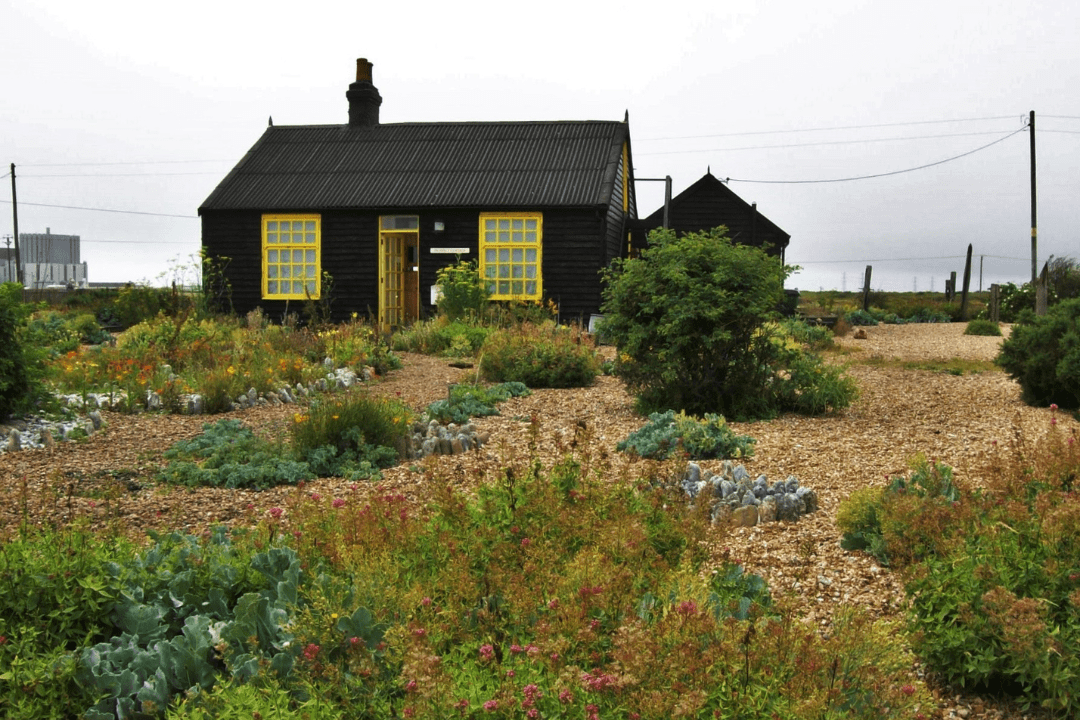
    Modern Nature is Derek Jarman’s journal. It spans two years towards the end of his life after he started his garden at Dungeness, Kent. A mixed account of flower-lore, film-making, and his first-hand experience of the 1980’s AID’s crisis that would kill him four years later, the book is beautiful and surprisingly uplifting.

    It’s helped me reconnect with my creativity in the aftermath of change and let me think of myself as a creator. I’ve not wanted to ‘over-identify’ with the things I do by confusing them with who I am, but after reading Jarman I understand more clearly the origins of my discomfort in calling myself a writer.

    Process or product?

    Jarman is unapologetic about creating. The thought of being apologetic doesn’t seem to occur to him in Modern Nature. I wondered where he got that courage from. Clues came up in the space he seems to see between his process of creating and the created ‘products’ of his films. Through this distinction, I’ve been seeing my own process of creating art through the capitalist lens.

    Is writing a novel ‘productive’? Is this really the best way I could be spending my time? Can I call myself a writer, if I’m not being paid to do it? Does it even count as work, if it doesn’t make money? What does ‘work’ even mean? Is it fanciful – arrogant, even! – to call myself such a thing?

    Well, no. When I step out of that automatic thinking, I realise it doesn’t chime with me at all. The disconnection that can occur between capitalism and purpose is even a theme in Albion Awakes – and still sometimes I forget it! Writing is just something I do. If someone wants to sell my book without changing its core story, then great! I’ll work hard to make it sell-able – but I’m not writing to sell a product; that’s not my purpose. My purpose is the process.

    So I’m going to try hard and hesitate less, when saying I’m a writer. Creating can go back to being an activity, something that makes my heart sing, and connects me to others in this world. That’s value enough, eh?

    Ta, Derek!

  • How I finished writing a novel (with undiagnosed ADHD).

    How I finished writing a novel (with undiagnosed ADHD).

    Every writer seems to have advice for us wannabe authors on how to finish writing a novel. And no wonder we seek it! Nowadays, if you want to be published the traditional way, submitting to agents and publishers requires a completed and polished manuscript before even sending a ‘hello’.

    That’s a lot of work. While we have to earn enough money to live, address our other responsibilities, and remember how to rest, reaching a final draft can be pretty tough. It took me five years to finish my manuscript – and that’s whilst having a heck of a lot of privilege. But being someone with undiagnosed inattentive ADHD, following the advice I saw all over the internet on how to finish it didn’t work.

    Here’s what did.

    How the heck to be productive

    Write like a machine? Get up at 5.00 am every morning to write for two hours before the commute? Aim for 200 words minimum every day? Mate, that just ain’t how my brain works. My version of being productive required these solid basics:

    • enough sleep (or coffee)
    • a good diet (and coffee)
    • alone time
    • …time
    • a notepad
    • WiFi
    • A library/bookshop/cafe/other place of inspiration where you can physically write
    • deadlines designed for your brain
    • rewilding my creativity
    • enough money to afford all of the above

    For me the penultimate bullet point was the real learning curve. By ‘creativity’, I don’t mean that common, Romantic idea of ‘being a writer’ (spending long nights at a typewriter while necking a bottle of red and lamenting in worldly disillusionment), I mean finding the love for what you’re writing. Over and over (and over) again. The practice of finishing something so dang long and complex demands a healthy perseverance (not always the same thing as hyperfocus!)

    One symptom of ADHD is a depleted supply of dopamine which affects mood, focus and impulsivity. Regular and repetitive administrative or organisational tasks can feel more challenging. Sometimes, when I had writer’s block or couldn’t solve a plot hole, my writing slid into the realm of a chore. To get myself back into a space of creative excitement I had to rewild my creativity.

    Rewilding my creativity

    (Affordable) ways I reconnected to my story when dopamine was nowhere to be seen included:

    • Getting out of town. And I don’t mean paying for one of those crazy expensive writing retreats in the Cotswolds. Affordable Youth Hostel Association (YHA) hostels offered a great reprieve when I had some Annual Leave to use up. Rocking up to a rickety old building in the middle of nowhere, where I could hear birds and smell air and take walks and live without WiFi before nabbing the library room, did wonders for my writing. Booking outside of school holidays for even just a couple of days was cheap and productive.
    • Taking walks/getting outside. This one’s free if you have access to outdoor spaces. Walking helped me rewild my imagination by reconnecting me with my body and the world. Getting out of my head and not forcing it made all the difference. My characters, stories and ideas grew when I was half-looking away.
    • Turning my phone off (but keeping reminders on). Connecting to myself and my story instead of doomscrolling helped me dive into my novel’s world, while the reminders and notifications dug me out of hyperfocusing.
    • Creating deadlines. Creating deadlines isn’t exactly ‘wild’, but it certainly helps people with ADHD to focus. Being accountable to others – a writing group, for example – was useful for times I struggled to be accountable to myself.

    Sustaining practice

    These techniques really helped me sustain my practice. Sure, my writing progress was slow (five years!) but I learned the craft during that time; managed to stay healthy; saw my friends once in a while, and earned enough money to live. I call that a win.

    Do you work on long-term creative projects with ADHD? What techniques have you found useful? Hit me up in the comments if you have any.